
Last updated November 23, 2026
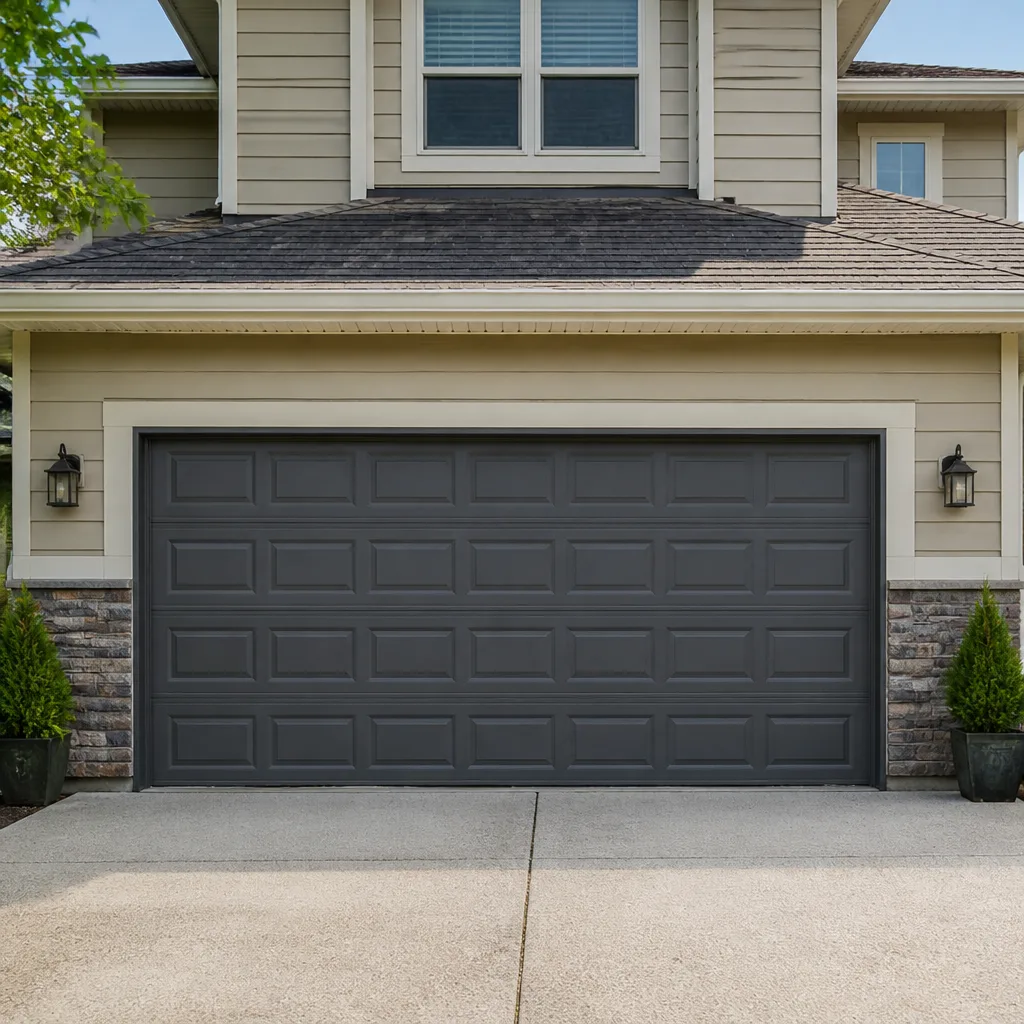 Raised-panel steel
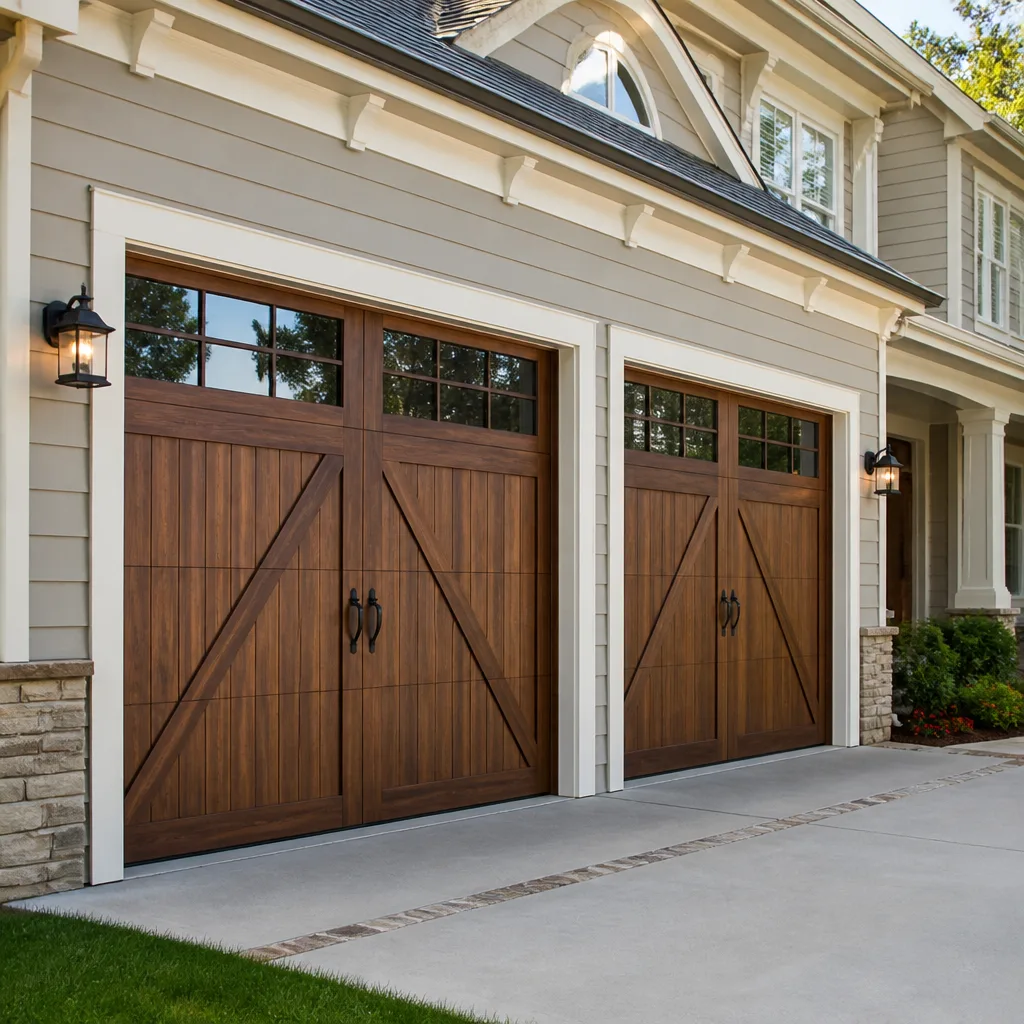 Carriage house
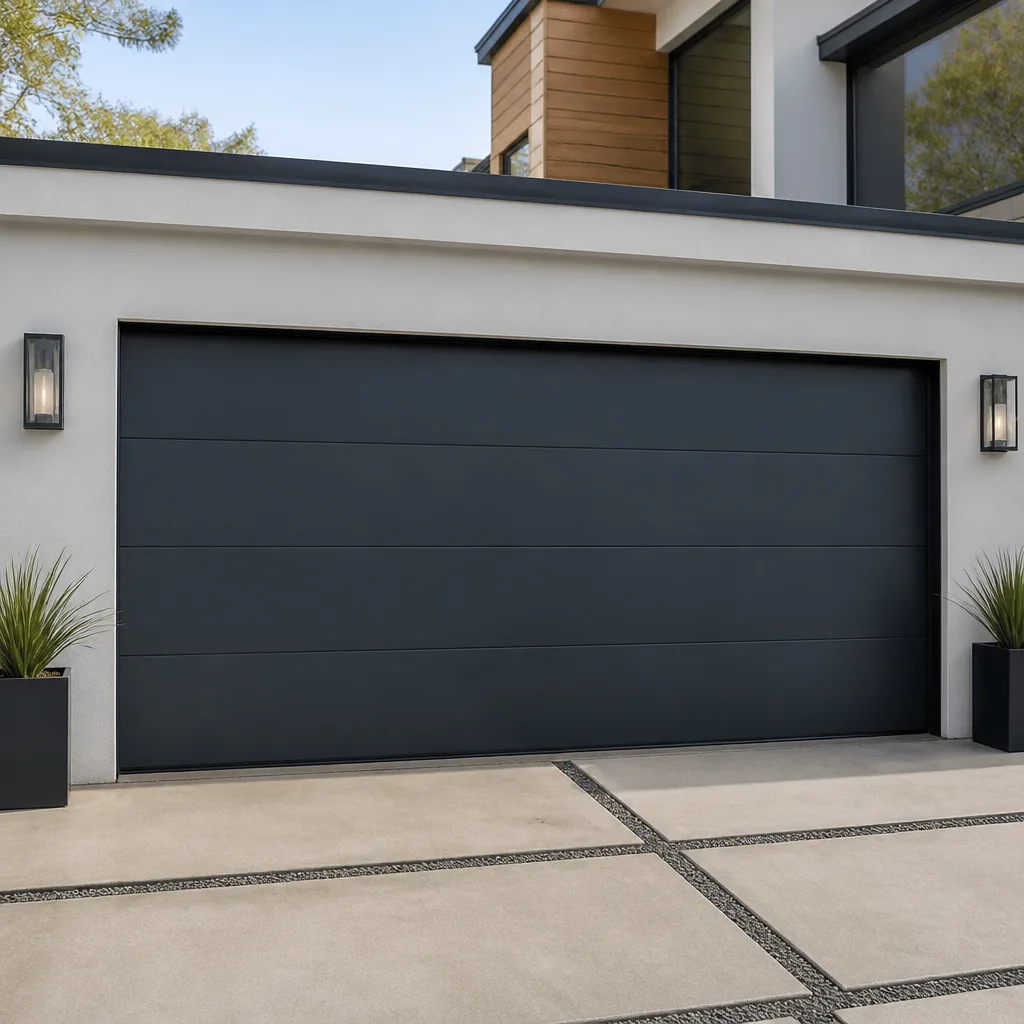 Modern flush
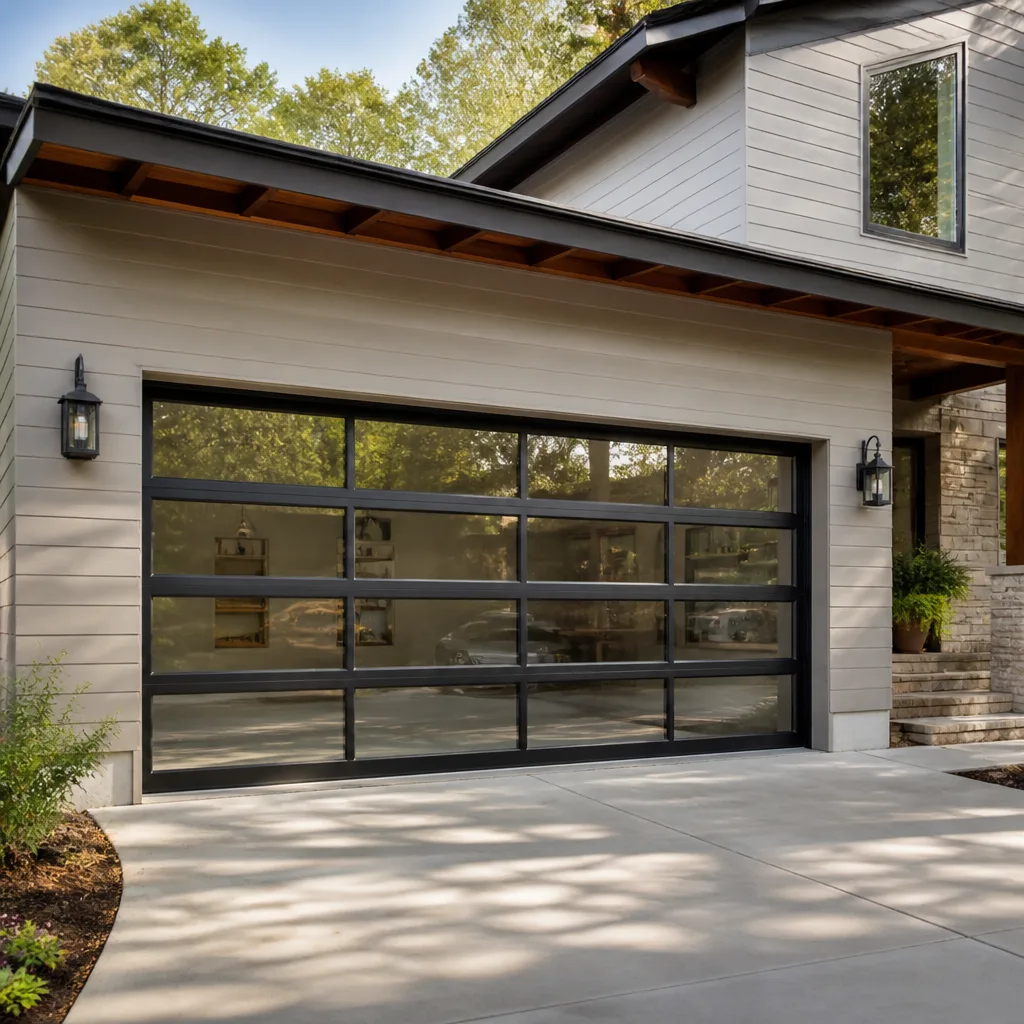 Full-view glass
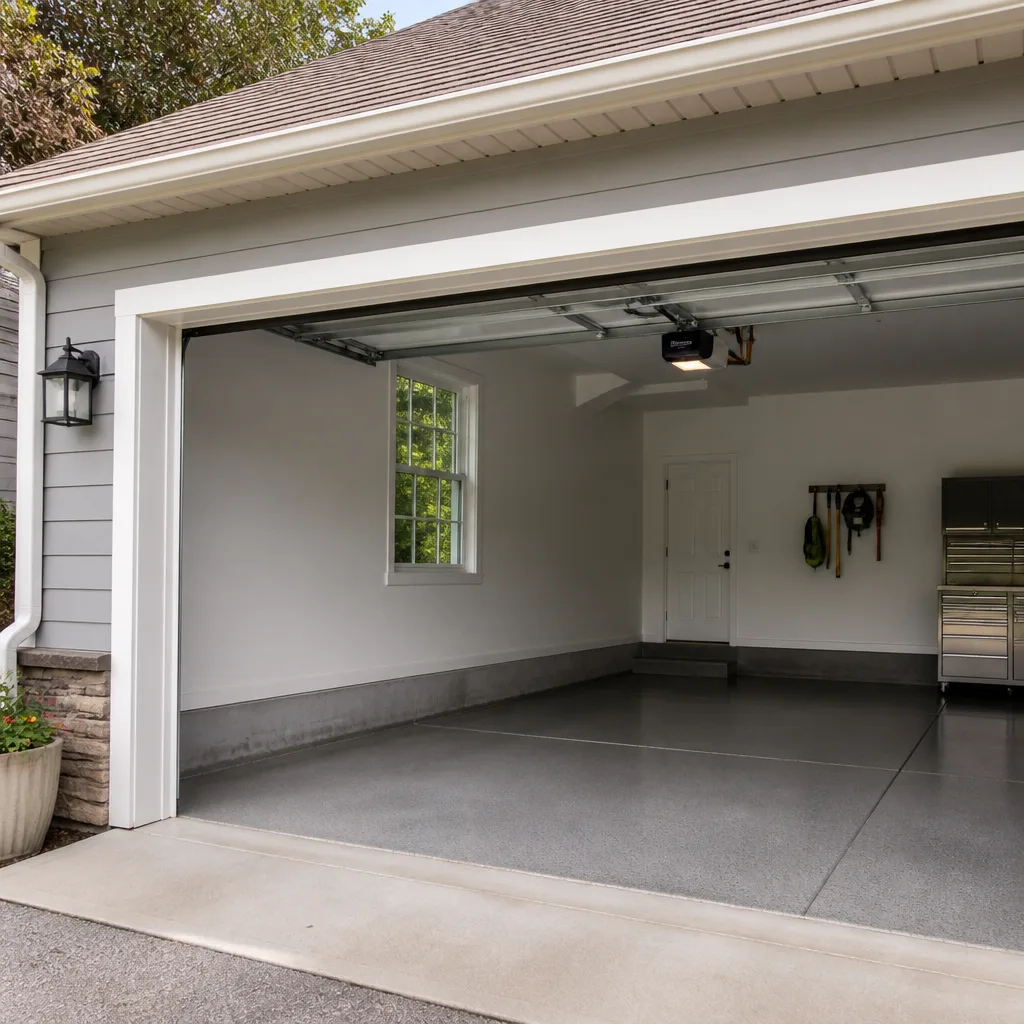 LiftMaster openers
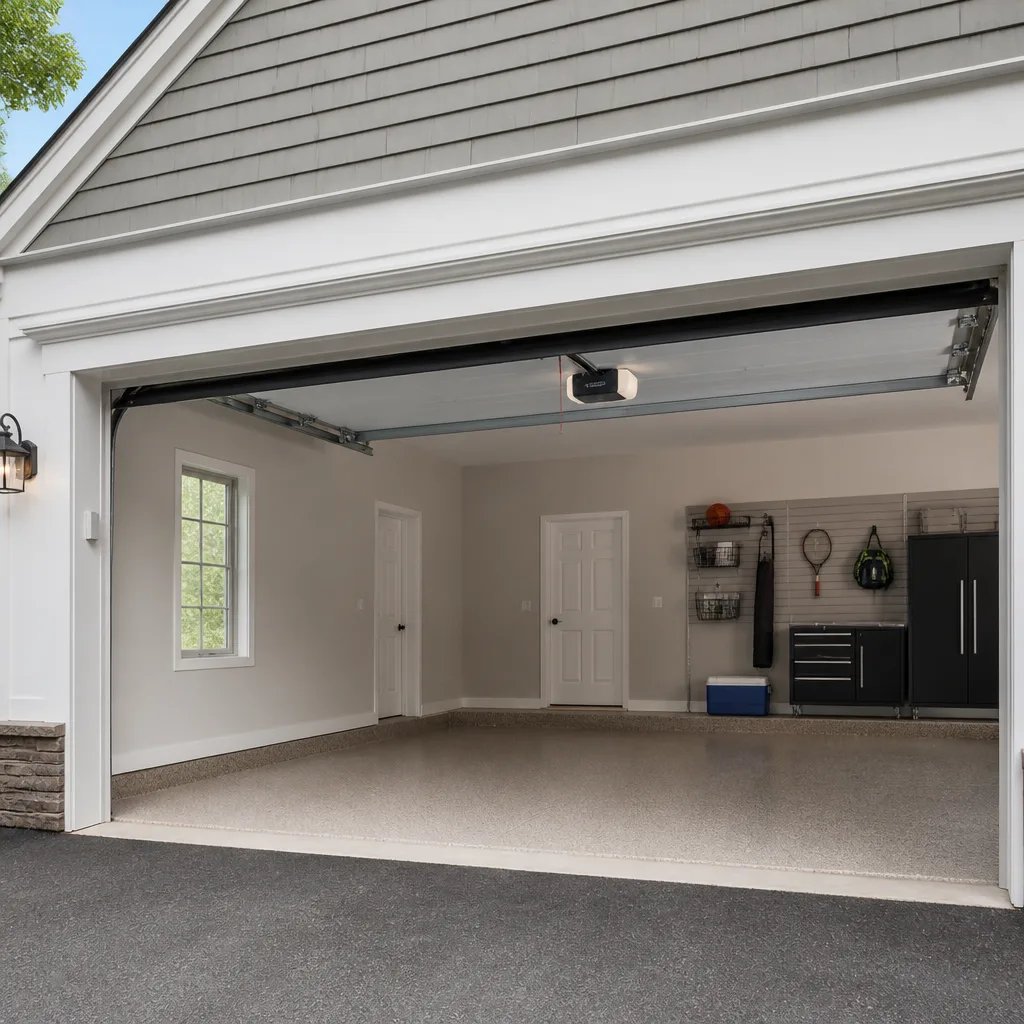 Chamberlain openers
Full 25-point door and opener safety check with every visit - springs, cables, rollers, tracks, and your LiftMaster or Chamberlain opener included
You get a price before we start. It does not change when the pro arrives.
Get your free estimateThe Complete Guide to Garage Doors in Canton
Most Canton homeowners choose a garage door by looks alone. Then they spend the next two years wrestling with what they picked: a panel style their HOA flags, springs rated for a cycle count that doesn’t match a family’s daily use, or an opener that struggles through Georgia’s summer humidity swings. A garage door in Canton isn’t a cosmetic decision. It’s a mechanical system bolted to the biggest opening in your house, on the wall that faces the street, in a county with its own building department and a subdivision culture that has opinions about your driveway. What follows is the guide we’d give a neighbor: material choices that hold up to Cherokee County weather, what HOA restrictions actually look like inside Bridgemill and Governors Towne Club, builder-grade versus replacement, brand parts availability around Canton and Woodstock, and how to think about the largest moving part of your home.
Quick Answer
A garage door in Canton has to handle humid summers, occasional freezing nights, and HOA design review at the same time, so the right pick is usually a steel or aluminum door in a profile your subdivision already approves. Insulated steel is the most popular replacement choice for Canton homes, aluminum handles damp conditions well when weight matters, and wood composite is best for a specific look rather than for longevity. Match the door to the spring cycle rating and the opener, not the other way around.
Styles & brands we work with
- Raised-panel steel
- Carriage house
- Modern flush
- Full-view glass
- LiftMaster openers
- Chamberlain openers
Table of Contents
- How Cherokee County’s Climate Shapes Material Choice
- HOA Restrictions in Canton’s Subdivisions: What They Actually Limit
- Builder-Grade Doors in Canton’s Boom-Era Homes vs. Proper Replacement
- Which Garage Door Brands Have Local Parts Availability
- Springs: The Largest Moving Part and Its Weakest Link
- Choosing an Opener That Fits a Canton Household
- Garage Doors and Homeowner’s Insurance Documentation
- Installing a Garage Door in Canton: The Process, Step by Step
How Cherokee County’s Climate Shapes Material Choice
Canton sits in Cherokee County where the summer air is heavy and wet, and winter brings a handful of freezing nights that are cold enough to matter but not cold enough to define the year. That combination does specific things to specific materials. Steel doors with a factory finish and a baked-on topcoat tolerate the humidity cycle well because the coating keeps moisture off the substrate. Where steel fails in Canton, it’s usually a scratch or a dent that breaks the finish, and then rust starts working from the inside of that spot.
Aluminum is lighter and won’t rust the way steel can, but it dents more easily and expands with heat. For a wide double-car opening it’s a workable choice when the springs and track are sized correctly. Wood composite doors look warmer than steel and hold a finish well, but any raw or unsealed edge is a target for the moisture Canton carries through June, July and August. A composite door that’s properly sealed on all six sides holds up. One that isn’t, won’t.
- Insulated steel: the practical default in Canton for durability, finish life, and HOA color matching.
- Aluminum: good for large openings and humid air, lighter dent resistance, needs careful spring sizing.
- Wood composite: the best look if the design review demands it, but sealing quality decides how long it lasts.
- Wood: a heritage look, but the highest maintenance burden in this climate and worth thinking through before committing.
One detail homeowners miss: insulation isn’t mostly about the door’s surface. It’s about the door slowing heat transfer from an attached garage into the rooms above and beside it. In a Canton summer, an uninsulated door turns a garage into a heat box that pushes into the house. If your garage sits under bedrooms or next to a kitchen, insulated panels are the choice that makes the room behind them livable.
HOA Restrictions in Canton’s Subdivisions: What They Actually Limit
Canton’s larger subdivisions are planned communities, and their architectural review standards were written to keep a consistent streetscape. In practice, that means the door you install may need approval before it goes in, and the approval often has more to do with color and panel profile than with brand. Bridgemill and Governors Towne Club are the two names Canton homeowners most often bring up when a door style runs into a review, though the pattern holds across the planned communities that spread through the county as Canton grew.
What architectural standards typically address:
- Color: approved palettes that lean toward neutral tones and match the trim and roof of surrounding homes.
- Panel style: raised-panel versus carriage-house versus flush, sometimes pinned to the era the section was built.
- Window placement: whether glass is allowed, where, and how many panes across a bay.
- Material: some communities restrict obvious metal or insist on a wood-look face on doors that face the street.
- Hardware: decorative straps and handles may be allowed on some sections and not others.
There’s a practical order of operations here that saves a lot of grief. Before you order anything, pull your subdivision’s architectural guidelines and see what’s on the approved list. Then have the door specified to match. If your community requires a submission, put it in before the door is ordered, not after it arrives in the driveway. We’ve seen homeowners fall in love with a carriage-house door only to find their section’s guidelines call for raised panels, and the reversal costs time and a restocking headache. A contractor who works in Canton regularly already knows which communities are strict and which are lenient, and can steer the selection toward something that goes through review the first time.
Builder-Grade Doors in Canton’s Boom-Era Homes vs. Proper Replacement
A lot of Canton’s housing stock went up during a long stretch of fast residential growth, and the doors on those homes were chosen to hit a build budget, not to last a generation. Builder-grade typically means a thinner-gauge steel skin, a non-insulated or minimally insulated panel, lighter-gauge track, and springs sized for the lightest door that would pass inspection. Those doors work fine for the first several years. Then the pattern shows up: a dent that rusts through faster than it should, a panel that’s been repaired too many times to repair again, springs that wear out years earlier than a homeowner expects because the cycle rating was chosen to keep the builder’s cost down.
What a proper replacement actually involves, compared to a like-for-like swap:
- Measure the opening, not the old door. Older builder doors are sometimes undersized for the rough opening. A replacement gets sized to the actual opening and headroom.
- Check the spring and hardware spec. Heavier insulated panels need heavier springs. A replacement that keeps the old springs will wear them out faster.
- Inspect the track, rollers, and hinges. Replacing the door but keeping worn rollers and bent track is a false economy.
- Verify opener capacity. A new insulated door weighs more. An older opener that was near its limit with the old door may not lift the new one reliably.
- Confirm the HOA profile and color before ordering. The same review standard that applies to a new build applies to a replacement.
- Get the written estimate in writing before work starts. The price is agreed before we begin, and that’s the price.
The upgrade that most often justifies the cost isn’t the door face. It’s the hardware package: heavier springs, a properly sized opener, and track that’s straight and anchored. A Canton homeowner who replaces the door but skips the hardware tends to be back on the phone within a couple of years with a spring or an opener that’s given up.
Which Garage Door Brands Have Local Parts Availability
Brand matters less than what happens when a part fails. In the Canton and Woodstock area, parts availability for the major door and opener brands varies. The brands with broad dealer networks and stocked distribution tend to get a homeowner back in service faster, while a door or opener with thin local supplier coverage can mean a wait while a component ships in. We qualify to work on LiftMaster, Chamberlain, Genie, Clopay, Amarr, Wayne Dalton, Craftsman, and Raynor systems, so the practical question isn’t which brand to buy but which brand will be easy to keep running.
Roughly how the categories break down in this market:
- Opener repair (LiftMaster, Chamberlain, Genie, Craftsman): these are the four brands found on most Canton garage ceilings. Parts and compatibility are generally straightforward, including the smart-home integrated models that have become common on newer homes.
- Door repair (Clopay, Amarr, Wayne Dalton, Raynor): panel and hardware availability is generally good for the common residential profiles, though a specific panel in a specific color can mean a lead time rather than a same-week fix.
- Specialty or discontinued profiles: the real wildcard. A door from an older section of a subdivision may need a panel that isn’t stocked, and a homeowner should know that at the estimate, not after the order.
If your system is a garage door opener repair question, brand-specific knowledge shortens the diagnosis considerably. We don’t guess at a LiftMaster logic board or a Genie travel module; we know how each one behaves and go straight to the likely cause. That’s the “we know your brand” part of the work, and it’s why a homeowner with a Chamberlain that won’t close is better served by someone who’s serviced a thousand of them than by a general handyman.
Springs: The Largest Moving Part and Its Weakest Link
The garage door is the largest moving part of a Canton home, and the torsion spring is the piece that carries the load. A standard torsion spring is rated in cycles, and a cycle is one open-close pair. A family that comes and goes several times a day burns through cycles faster than a household that leaves once in the morning and returns once in the evening. Springs also fatigue faster in humid air, and a spring that’s been sized for a light builder door will fail earlier when it’s carrying a heavier insulated replacement.
Here is what a homeowner should understand, and what they should not attempt:
- The spring stores dangerous energy. A wound torsion spring or a stretched extension spring holds enough force to cause serious injury. This is not a do-it-yourself repair, and we say that plainly.
- The symptom tells you a lot. A door that opens a few inches and stops, or a loud bang from the garage, usually points to a broken spring. A door that’s heavy to lift by hand and won’t stay up may have a spring at the end of its life.
- Spring sizing drives longevity. A higher-cycle spring costs more up front and lasts longer. It’s worth asking what cycle rating you’re getting.
- Pair replacement is standard. Springs on a door usually wear out together, so a matched pair is the normal approach.
Spring repair is a core specialty for us, not an afterthought. garage door spring repair is a job where the safety margin is the whole point, and it’s a job we’d rather handle than coach over the phone. Our technicians have up to 10 years of experience with torsion and extension spring systems, and they’ll tell you honestly whether a repair or a replacement makes more sense for your door.
Choosing an Opener That Fits a Canton Household
Openers fail in predictable ways, and the right opener for a Canton home depends on how the garage is used. A door on a two-car garage that opens six times a day has different needs than a garage that doubles as a workshop. The four brands a homeowner is most likely to have here: LiftMaster and Chamberlain on the newer and smart-home side, Genie as a widespread all-around system, and Craftsman on a lot of older homes. All four get serviced, and the two most common failures show up again and again: a wall button that no longer responds, and a safety sensor that trips on sunlight or a misaligned bracket.
What to weigh when you’re choosing or replacing an opener:
- Lift capacity versus door weight. Insulated doors are heavier. An undersized opener wears out its gear and motor faster.
- Belt versus chain drive. Belt drives run quieter, which matters when the garage sits under a bedroom.
- Smart-home compatibility. LiftMaster and Chamberlain integrate with common smart-home platforms. Decide whether you want that before you buy.
- Battery backup. Worth considering if a power blip would strand a car. Ask what the model offers rather than assuming.
- Safety reverse and sensor function. Every opener should be tested monthly with the door’s auto-reverse feature.
If the existing opener is fine but the door is the problem, that’s a different conversation. And if a repair company tells you the door is unrepairable, you shouldn’t have to go find a separate installer. We do garage door repair and full installation, so the decision stays with one company from the diagnosis through the new door if it comes to that.
Garage Doors and Homeowner’s Insurance Documentation
Insurance questions about garage doors are more about records than about claims. The garage door is the largest moving part of the house, and when a door fails and damages a car, a stored item, or the door structure itself, an insurer will want to know what happened and what was installed. Documentation helps. A written estimate and a record of the door model, spring cycle rating, and opener brand are the paper trail that answers those questions if they ever come up.
A few practical habits:
- Keep the door specifications. Model, panel profile, color, insulation, and spring cycle rating, all on one sheet with the installation date.
- Record the opener brand and model. If the opener drives the door, the insurer’s adjuster will want to see it.
- Note any replacement of springs or hardware. A spring replaced at a higher cycle rating is a documented upgrade, and it’s worth keeping with the house records.
- Ask your agent about coverage specifics. Whether a failed spring or a dropped door is covered is a policy question, and the answer depends on your policy, not on the trade.
- Don’t lean on speculation. Insurers don’t take a contractor’s guess as fact. Records do more work than opinions.
One thing worth saying clearly: emergency repairs don’t carry a premium from us. The price is quoted and agreed before any work starts, whether the call comes in during the day or the door is stuck with a car inside. If you’re documenting a repair for your insurer, ask for the estimate and the specification sheet to go with it.
Installing a Garage Door in Canton: The Process, Step by Step
Installation work is measured, ordered, and scheduled. That’s the honest difference between a repair and a new door: a repair can often happen same day, but a new door has to be specified to the opening, approved by your HOA where applicable, and set on a date that works for both parties. No installation gets promised as same-day work, and no one should. Here’s what a proper job looks like start to finish.
- Measure and assess. We measure the rough opening, the headroom, the side clearance, and the track. We also look at the opener and spring spec to see whether they’ll carry the new door.
- Select the door. Material, panel profile, color, insulation, window options, and hardware. We’ll steer to something the HOA will approve and that fits the climate.
- Confirm the HOA review. Submit to architectural review first. Get the approval in hand before ordering.
- Order the door. Some profiles and colors are stocked locally; others carry a lead time. We tell you which upfront.
- Schedule the install. The date is confirmed and the door arrives on it. A written estimate is in hand before any work begins.
- Remove and install. Old door out, springs and track verified, new door set, hardware installed to spec.
- Balance and test. The door is balanced, the springs tensioned, the opener tested, and the safety reverse checked with the homeowner present.
- Walk through. We show you how to test the door yourself and leave the specification sheet for your records.
One thing Canton homeowners deserve to know: we don’t promise a schedule we can’t keep. Installation work is planned around the door’s arrival, not around a same-day pressure tactic. If you want the repair path instead, the Canton Garage Door Repair Experts team handles same-day emergencies on a much shorter timeline. For a new door, the free estimate and the written quote are what come first.
Common Mistakes to Avoid
- Picking the door before checking the HOA guidelines. A beautiful carriage-house door can be rejected in a community that calls for raised panels. Read the guidelines first and order second.
- Replacing the door but not the hardware. Old springs, worn rollers, and bent track will undo a new door’s benefits faster than any other single mistake in this climate.
- Ignoring the opener’s capacity. A new insulated door weighs more than the builder door it replaced. If the opener was near its limit before, it’ll fail after.
- Trying a spring replacement yourself. A wound torsion spring holds dangerous energy. This is the one repair no homeowner should attempt, and injury can be severe.
- Getting a verbal number instead of a written estimate. A verbal quote is not a price. Ask for it in writing, and keep it.
- Letting a broken door sit open or ajar for days. An unsecured garage door on a Canton street is an open invitation, and it’s also exposure to weather that the door isn’t meant to take.
- Skipping your subdivision’s architectural review on a replacement. Aesthetic review applies to replacements, not just to new builds.
See the difference
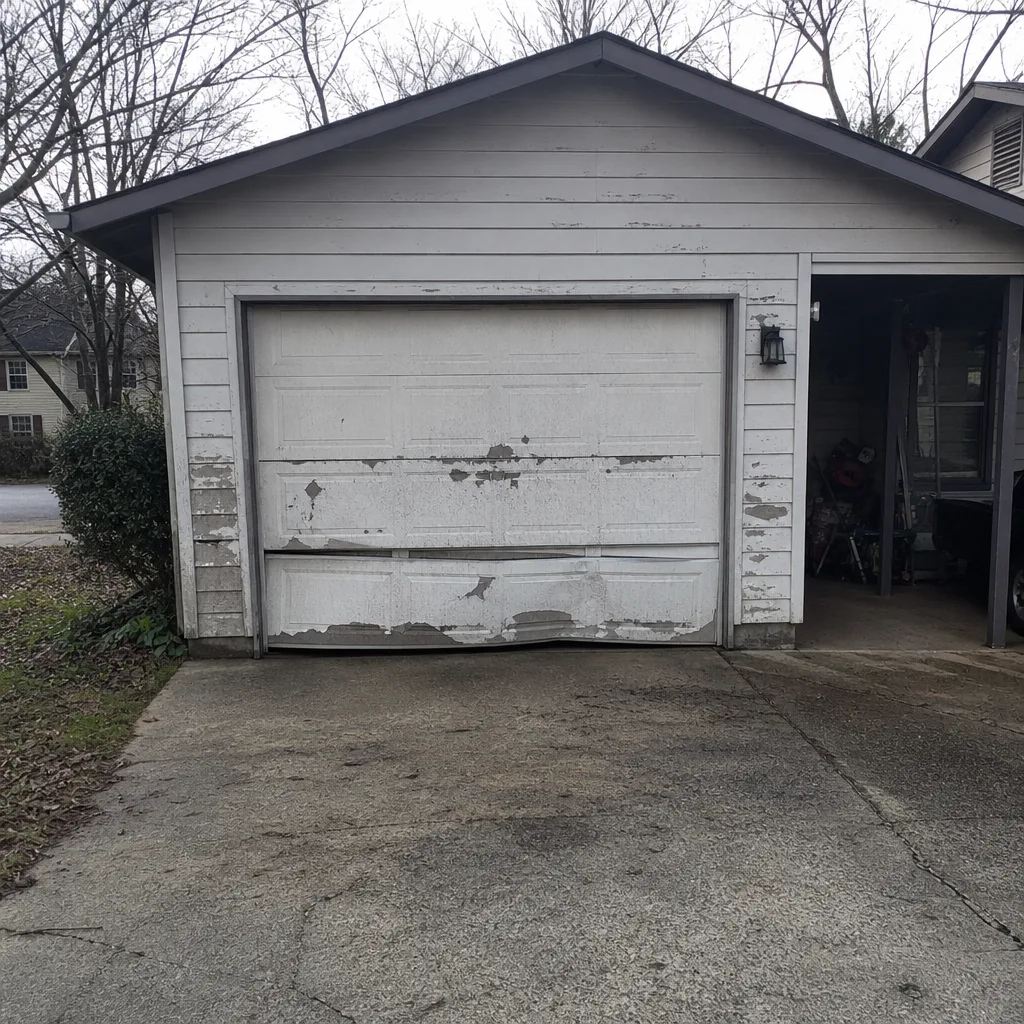 Before
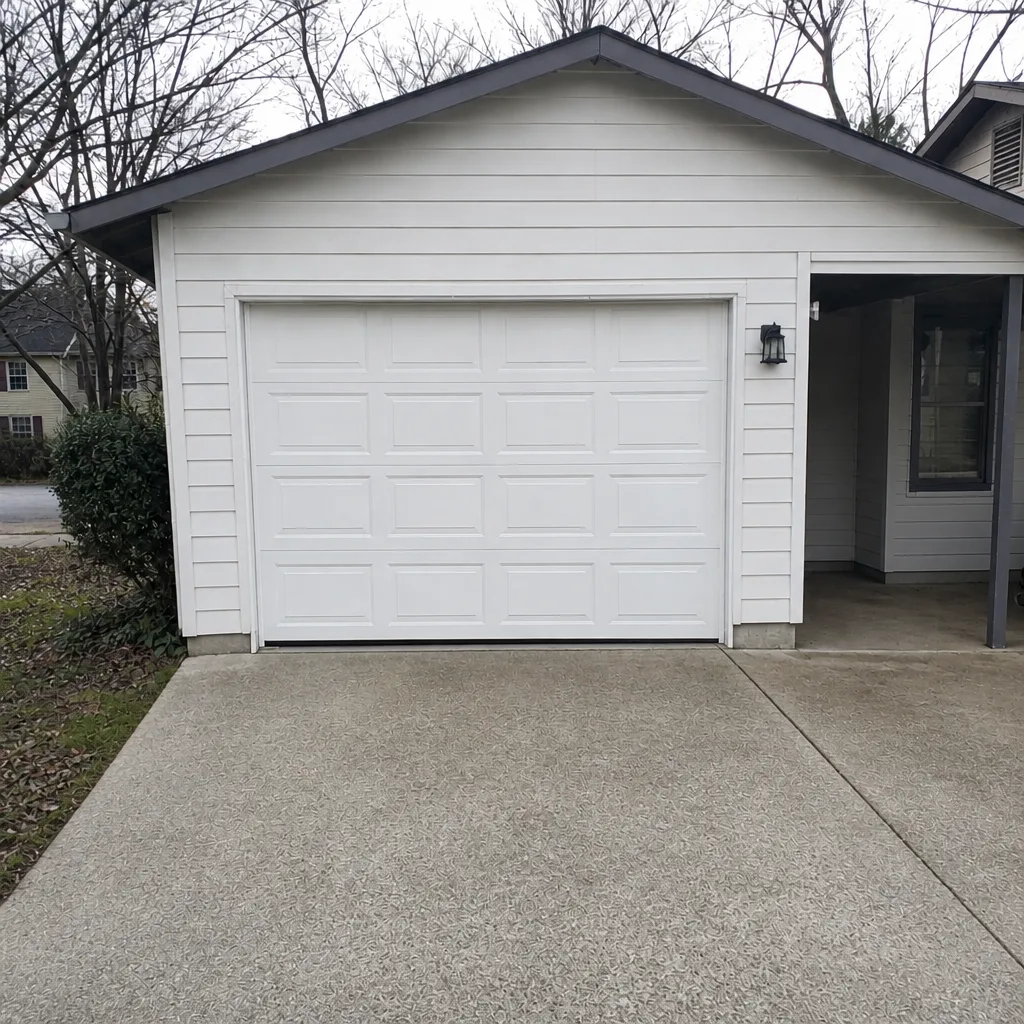 After
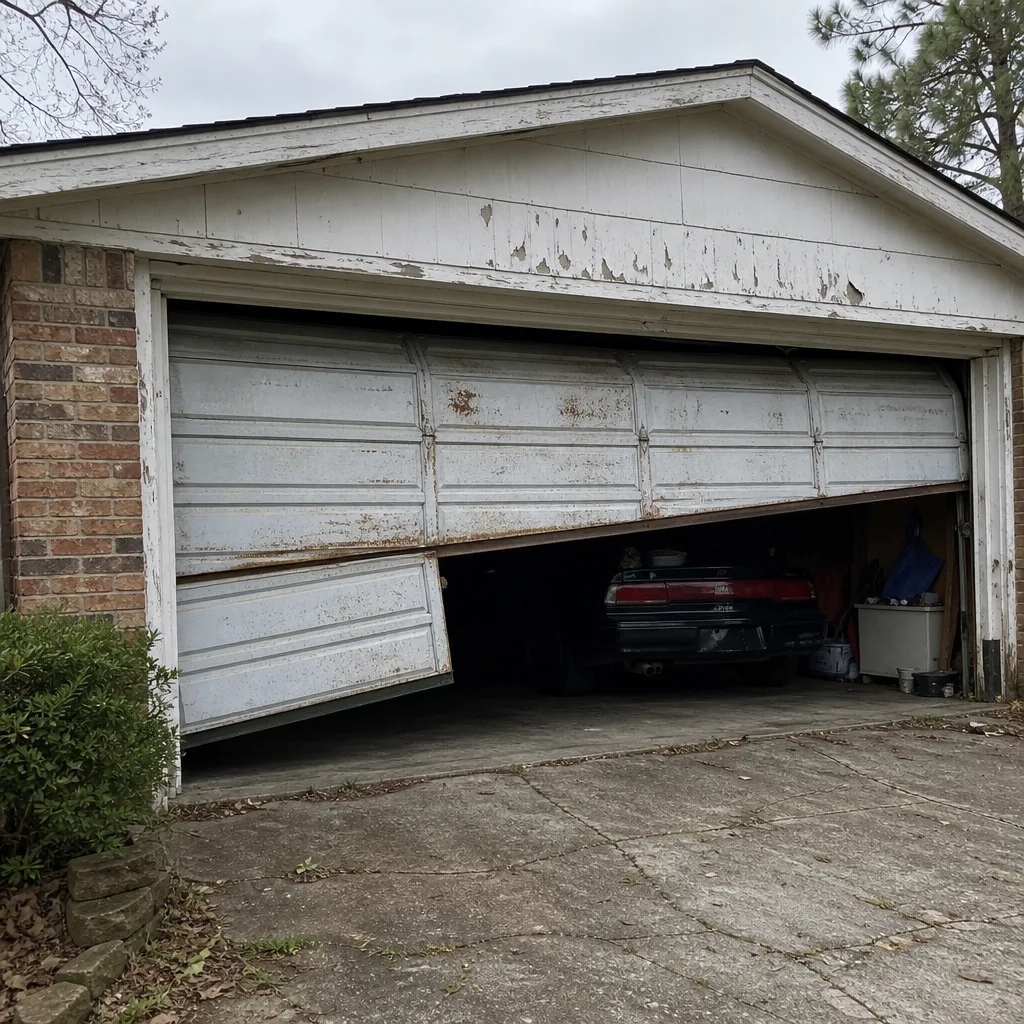 Before
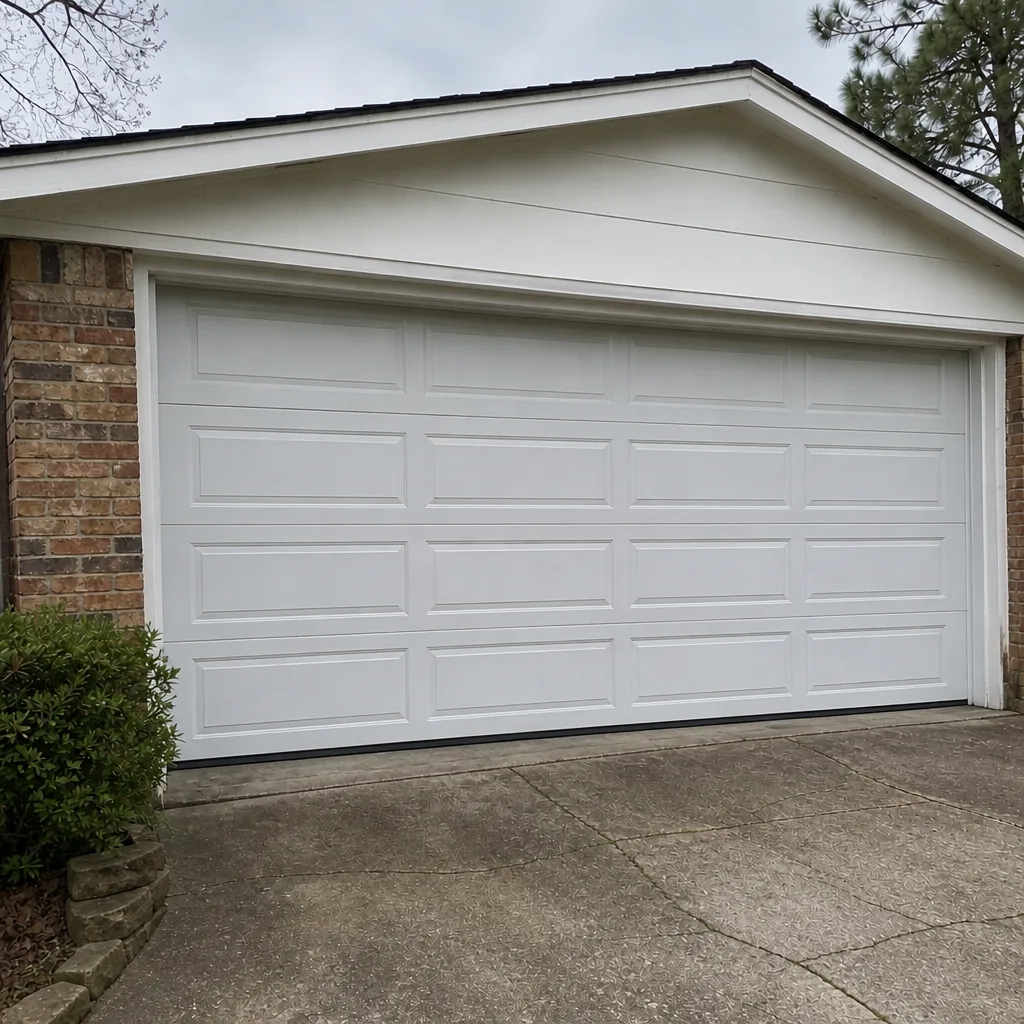 After
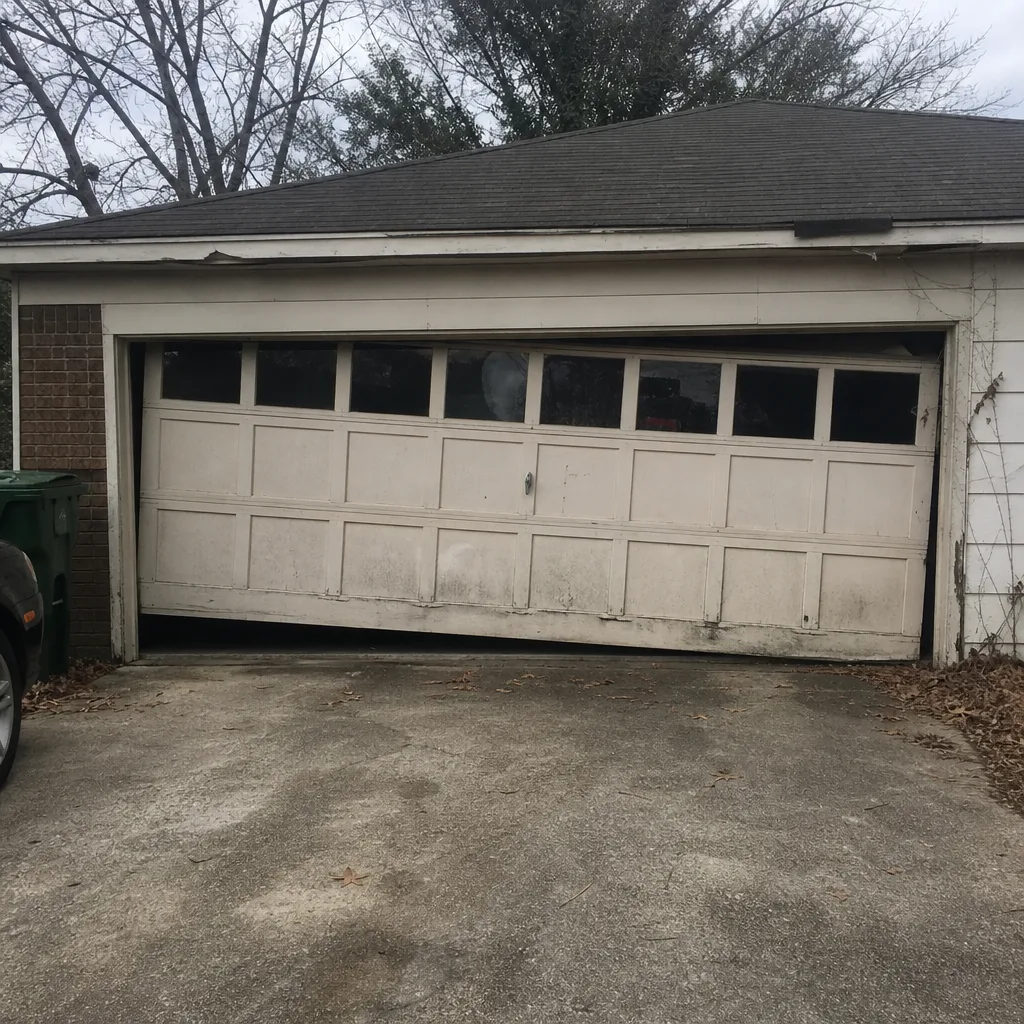 Before
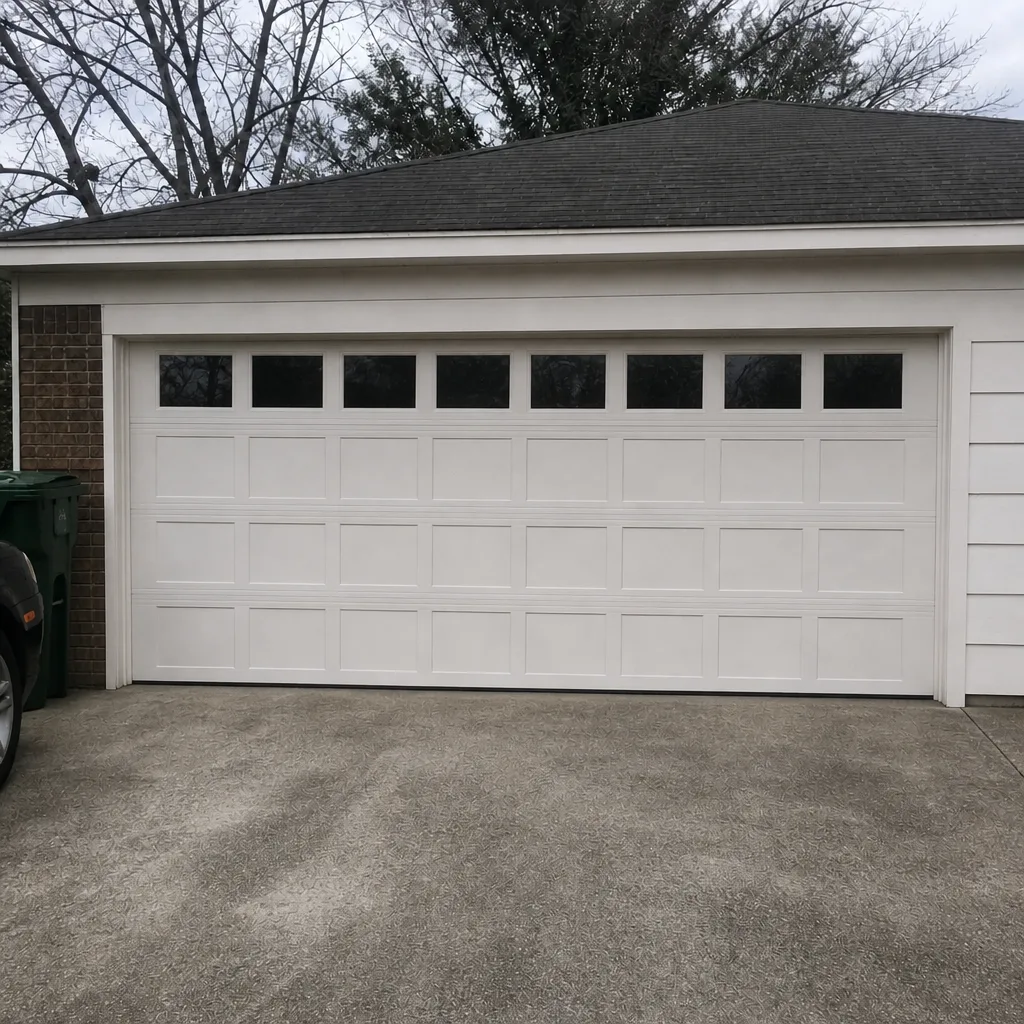 After
When to Call a Professional
Call a professional when the door comes off its track, when a spring breaks with a loud bang, when the opener won’t respond to the wall button or the remote, when the door reverses for no obvious reason, or when it’s visibly sagging or binding. Call when the safety sensors won’t stay aligned, when the opener’s motor runs but the door doesn’t move, or when the door is damaged and won’t close fully. And call when you’re ready to replace a door, even if nothing is broken; the selection and review process benefits from someone who does this weekly. Canton Garage Door Repair Experts offers free estimates across Canton. Call (833) 304-2178. We answer 24/7. Fast dispatch from 7am to 7pm, Sunday through Friday.
Frequently Asked Questions
Repair costs in Canton depend on what failed. Spring replacement is the most common job, and a single-spring replacement typically runs in the range of a few hundred dollars, with a matched pair costing about twice a single spring. Opener repairs are usually on the lower end, and panel or track damage varies widely. We give a written estimate before any work starts, and the price is agreed before we begin. Call (833) 304-2178 for an exact quote. The estimate is free.
For emergency situations like a broken spring, a door off its track, or a door that won’t secure, same-day service is possible. We answer 24/7, and fast dispatch runs from 7am to 7pm, Sunday through Friday. For a new door installation, the timeline is measured, ordered and scheduled rather than same-day. Call (833) 304-2178 and we’ll tell you what’s realistic.
The written estimate is the price. We quote the job after looking at the door and the opener, you approve the written quote, and that’s what you pay. If we find something additional mid-job, we stop and talk it through before doing anything else. Call (833) 304-2178 for an estimate. Estimates are free.
The local professionals we connect you with are licensed and insured as their state requires. Our technicians have up to 10 years of experience with garage doors, springs, and openers. Call (833) 304-2178 if you’d like to ask about qualifications for a specific job.
In most Canton planned communities, yes. Architectural review typically applies to color and panel style, and the review applies to replacements, not just new construction. Bridgemill and Governors Towne Club are among the communities where homeowners ask most often. Check your subdivision’s guidelines before ordering, and submit the door for review before it’s ordered. Call (833) 304-2178 if you’d like us to help match a door to a specific community’s standard.
Spring repair is a same-day job when parts are available for your door. We carry the most common spring sizes, and for less common configurations we’ll tell you upfront if there’s a wait. Call (833) 304-2178. We answer 24/7, and fast dispatch from 7am to 7pm, Sunday through Friday.
The Bottom Line
Canton’s climate, its planned-community review standards, and its boom-era builder doors all push in the same direction: choose the door for the house you actually have, not the showroom photo. Steel and aluminum handle the humidity; wood composite works if it’s sealed properly. The HOA review comes before the order. Springs and hardware carry the door, and the spring is the one part no homeowner should touch. Match the opener to the door’s weight, keep your records for the insurer, and get the estimate in writing before anything starts. Whether it’s a snapped spring in Bridgemill or a full new door in Governors Towne Club, we do repair, opener repair, spring repair, and installation. Call (833) 304-2178 for a free estimate.
Written by the team at Canton Garage Door Repair Experts.